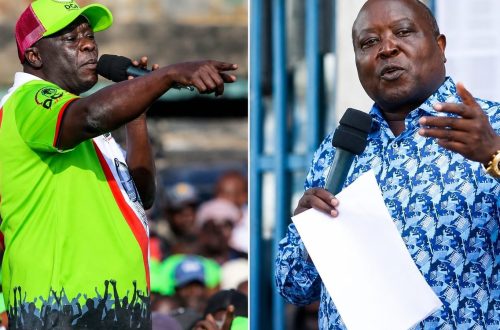
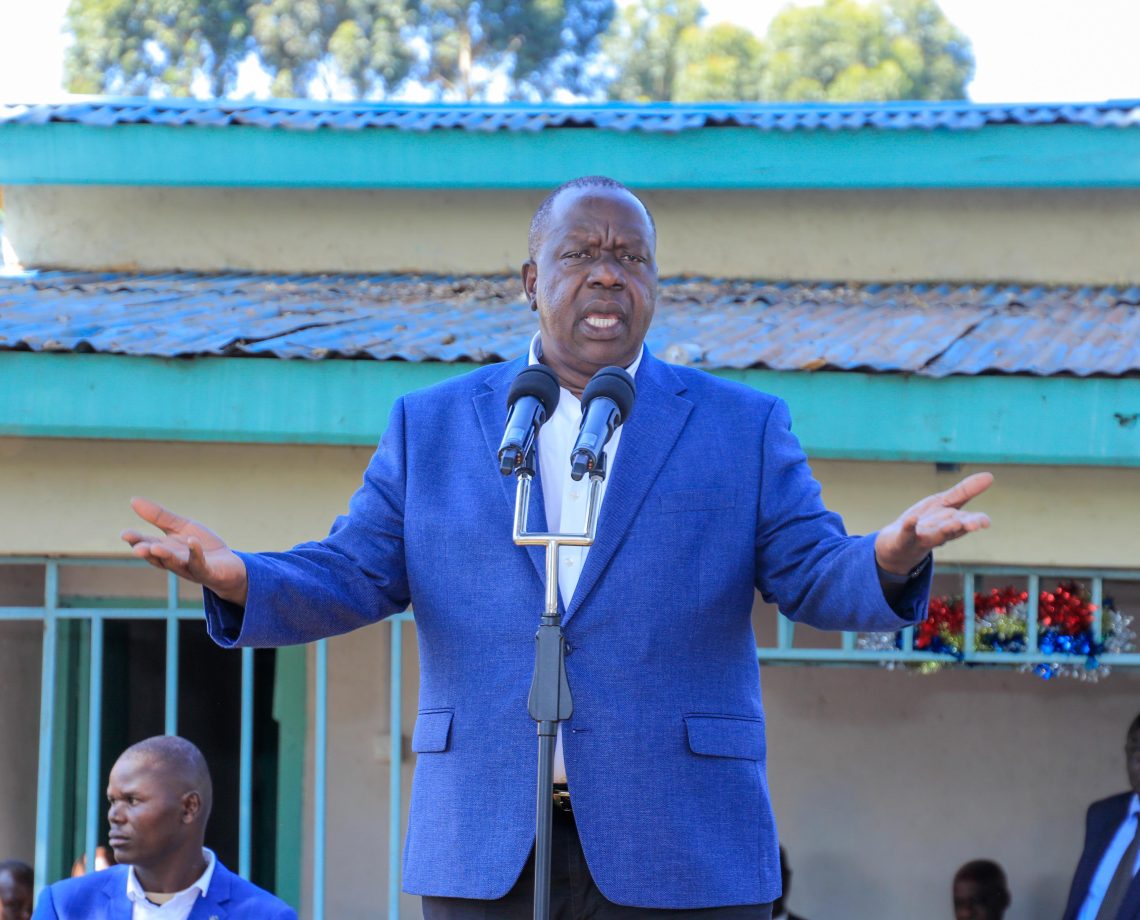
As Fred Matiang’i pursues the 2027 presidency through Jubilee, a bigger question is emerging in Gusii politics: Why did he not take up UPA or build a new political party?
The question is difficult to ignore.
If Fred Matiang’i is seeking the presidency as a son of the Omogusii community, why did he choose Jubilee, a party whose strongest political moment was the Uhuru Kenyatta presidency, instead of taking up the United Progressive Alliance (UPA), a party with roots in the Gusii region?
And if UPA was not considered strong enough for a presidential bid, why not build a new political vehicle that could bring together the community and, at the same time, attract support from across Kenya?
The question is not necessarily an indictment of Jubilee, nor is it an argument that every Omogusii voter should support UPA.
It is a question about political institution-building.
For decades, the Omogusii have produced influential politicians, but their votes have often been distributed among different political parties. The result has been strong individual leaders but limited consistency in speaking and negotiating as one political bloc.
The 2022 General Election illustrated that reality.
UPA won the Nyamira governorship through Amos Nyaribo, but the wider Gusii political landscape remained divided among UPA, UDA, Jubilee, ODM and other political vehicles.
In other words, 2022 was not an election in which Omogusii united behind one party. It was an election that exposed the extent of their political fragmentation.
That makes Matiang’i’s choice of Jubilee particularly interesting.
THE NYACHAE LESSON
Gusii political history offers an important precedent.
In 2002, the late Simeon Nyachae left KANU and built FORD-People into a formidable political vehicle. The party performed strongly in the Gusii region, giving Nyachae significant parliamentary influence even though he did not win the presidency.
That political strength mattered.
Nyachae’s parliamentary numbers helped establish him as an important player in the national political negotiations that followed the election. He later became part of the Kibaki government.
The lesson was not simply that Nyachae contested the presidency.
It was that political organization can turn votes into bargaining power.
The question today is whether that lesson has been lost.
WHY JUBILEE?
Matiang’i’s decision to pursue his presidential ambition through Jubilee is understandable from an individual political perspective. Jubilee is an established national party with a recognizable history, structures and national identity.
But a presidential campaign is also an opportunity to build a political institution.
That is where the UPA question becomes unavoidable.
UPA already exists. It contested the 2022 elections and demonstrated that an Omogusii-rooted party can win elective office.
But it did not become the political home of the entire community.
So perhaps the question should not be whether UPA was perfect.
The question should be:
Could it have been strengthened, reformed and transformed into a stronger national political vehicle?
And if the answer was no, why not create something new?
Kenya’s political history shows that political parties do not have to be decades old to become influential. What matters is organization, leadership, resources, a compelling national message and the ability to build coalitions beyond one’s traditional base.
THE BIGGER QUESTION
This is therefore bigger than Matiang’i and bigger than Jubilee.
It is about how the Omogusii approach politics.
Should every presidential ambition require the community to enter an existing political house?
Or can the community build a political institution capable of negotiating nationally on its own terms?
Political unity does not mean every Omogusii voter must support one candidate. Democracy allows different choices.
But political unity can mean having a common institutional platform through which shared interests are organized and negotiated.
That platform could have been UPA.
It could be a reformed UPA.
It could be a new party.
Or it could eventually be a broader national political movement.
What matters is that the institution must be bigger than one politician and strong enough to survive beyond one election.
As 2027 approaches, Matiang’i’s Jubilee candidature therefore presents Omogusii with more than a presidential choice.
It presents a question about political strategy:
Are we once again going to borrow a political house or is this the moment to finally build one?